

Transforming Burn-In Systems with Predictive Maintenance Strategies for Enhanced Reliability
- Jul 4
- 3 min read
Burn-in systems play a critical role in ensuring the quality and reliability of electronic components by subjecting them to stress testing before they reach the market. Traditionally, maintenance of these systems has followed a reactive approach, where repairs occur only after failures happen. This method often leads to unexpected downtime, increased costs, and compromised product quality. Today, operations and reliability engineers are shifting toward predictive maintenance strategies that anticipate issues before they cause failures. This shift is transforming burn-in system management, improving reliability, and reducing costly interruptions.
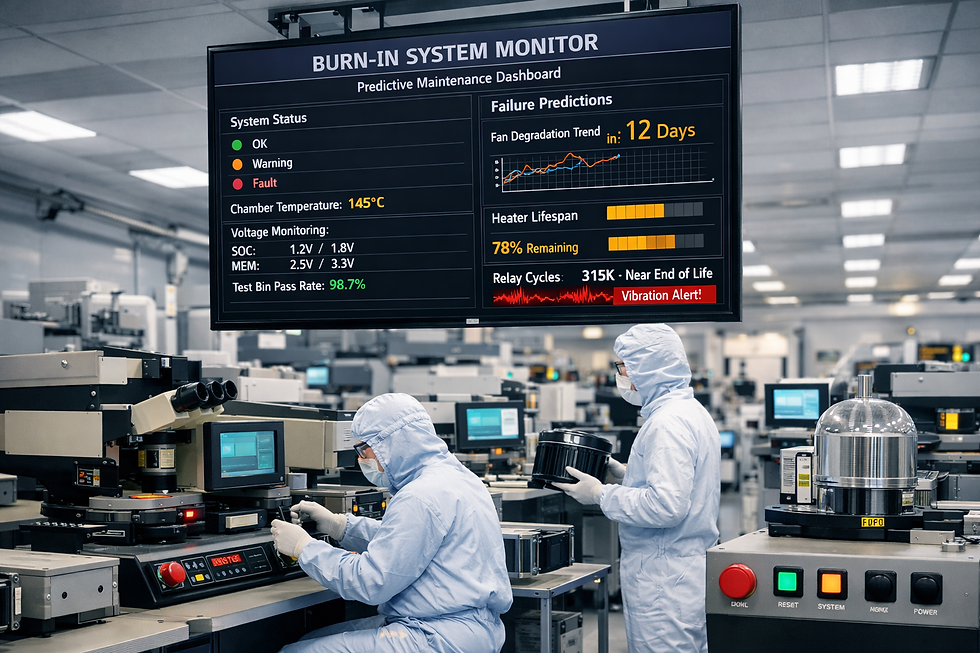
Burn-in system control panel displaying predictive maintenance data
Why Shift from Reactive to Predictive Maintenance?
Reactive maintenance waits for equipment to fail before taking action. This approach can cause:
Unexpected downtime that disrupts production schedules
Higher repair costs due to emergency fixes
Reduced equipment lifespan from repeated failures
Lower product quality due to inconsistent testing conditions
Predictive maintenance uses data and analytics to monitor system health continuously. It identifies early warning signs of wear or malfunction, allowing engineers to schedule maintenance at the optimal time. This proactive approach offers several advantages:
Improved system reliability by preventing unexpected failures
Reduced downtime through planned maintenance windows
Lower maintenance costs by addressing issues before they escalate
Better resource allocation by focusing efforts where needed most
For burn-in systems, which operate under high stress and temperature conditions, predictive maintenance is especially valuable. It ensures that the testing environment remains stable and reliable, directly impacting the quality of the components tested.
How Predictive Maintenance Works in Burn-In Systems
Predictive maintenance relies on collecting and analyzing data from sensors embedded in burn-in equipment. Key parameters include:
Temperature stability and fluctuations
Voltage and current levels
Vibration and mechanical stress indicators
Environmental conditions such as humidity
Advanced analytics and machine learning models process this data to detect patterns that precede failures. For example, a gradual rise in temperature variance might indicate a cooling system issue. The system then generates alerts for engineers to investigate and act before a failure occurs.
Introducing the Innovation Lab Dashboard
Our Innovation Lab dashboard offers a comprehensive solution for predictive maintenance in burn-in systems. It integrates real-time data collection, analytics, and visualization into a user-friendly interface designed for operations and reliability engineers.
Key Features
Real-time monitoring of critical system parameters
Predictive alerts based on machine learning models trained on historical failure data
Maintenance scheduling tools to plan interventions without disrupting production
Detailed reporting to track system health trends over time
Customizable dashboards tailored to specific burn-in system configurations
This dashboard empowers engineers to make informed decisions quickly, improving system uptime and reliability.
Real-World Examples of Predictive Maintenance Success
Case Study 1: Semiconductor Manufacturer
A semiconductor manufacturer implemented predictive maintenance on their burn-in ovens using sensor data and the Innovation Lab dashboard. Before adoption, they faced frequent unplanned downtime due to heater failures.
After deploying predictive maintenance:
Heater failures dropped by 60%
Unplanned downtime decreased by 40%
Maintenance costs reduced by 25%
Product yield improved due to consistent burn-in conditions
The system detected early signs of heater degradation, allowing timely replacements during scheduled maintenance.
Case Study 2: Electronics Testing Facility
An electronics testing facility used predictive maintenance to monitor cooling fans and power supplies in their burn-in racks. The Innovation Lab dashboard provided alerts for abnormal vibration and power fluctuations.
Results included:
Early detection of fan bearing wear before failure
Avoidance of overheating incidents
Increased confidence in test results due to stable operating conditions
Enhanced maintenance planning and resource use
These examples highlight how predictive maintenance can transform burn-in system operations, delivering measurable benefits.
Best Practices for Implementing Predictive Maintenance
To successfully adopt predictive maintenance for burn-in systems, consider these steps:
Start with data collection: Install sensors on critical components and ensure reliable data capture.
Analyze historical data: Understand common failure modes and patterns to train predictive models.
Choose the right tools: Use dashboards like the Innovation Lab that integrate analytics and visualization.
Train your team: Ensure engineers understand how to interpret alerts and act on them.
Iterate and improve: Continuously refine models and processes based on new data and feedback.
By following these practices, organizations can build a strong foundation for predictive maintenance that grows more effective over time.
The Future of Burn-In System Maintenance
As sensor technology and data analytics continue to advance, predictive maintenance will become even more precise and accessible. Integration with IoT platforms and cloud computing will enable remote monitoring and faster response times. For operations and reliability engineers, staying ahead with these tools will be essential to maintaining competitive, efficient, and reliable burn-in testing processes.


Comments